
Skip to content ↓

Dance, Drama & Music

Music

Development

Plan

2025 – 2026


Overview:


Detail

Information

Academic Year that this covers

2025 – 2026

Date written

Sep 2025

Date it will be reviewed

July 2026

Name of school music lead

Chloe Burke (DLS for Performing Arts)

Line manager for Performing Arts

Helen Tanner (Senior Vice Principal)

Local Music Hub name

SIPS Music | Harnessing the power of creativity and expression (sandwellmusic.org)


This is a summary of how Gospel Oak School delivers music education to all our students across three areas and the changes that will be implemented moving forward:

  • curriculum music
  • co-curricular provision, and
  • musical experiences

This following information provides an overview of the provision in place, the rationale for parents and carers of the school music offer and who we work with to support our student’s music education.

PART A: Music Curriculum

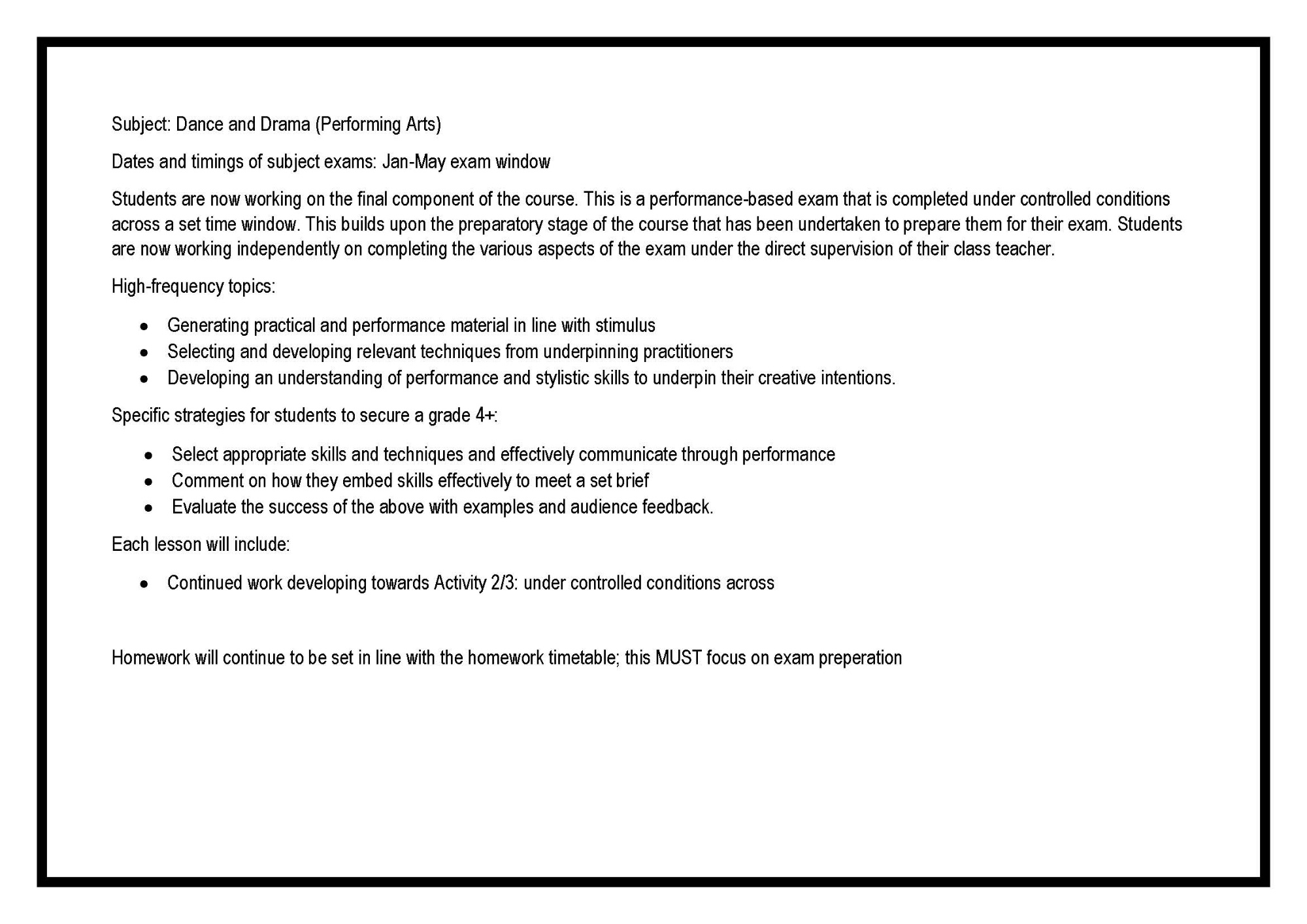
This section will investigate and demonstrate the content, skills and knowledge that is delivered through the timetabled curriculum across KS3 and the qualifications that students can obtain during KS4. The curriculums building blocks are fundamentally built upon from the National Curriculum in which elements are embedded from the Model Music Curriculum (March 2021).  Consequently, these key components are integrated into our teaching and delivery within lessons, with adaptations that suit the needs of the students we teach and the educational context of the school itself.

Instrumental development is a crucial part of this process and is intrinsically built and interwoven throughout the curriculum and learning journey that students undertake at Gospel Oak School. The key areas in developing the student experience focuses on both solo and ensemble performance, which is regularly embedded throughout their learning journey, alongside an understanding of the key stylistic features and use of musical elements in different styles and genres of music.  The curriculum is planned with sequencing at the forefront so that each topic builds upon and prepares students for their development over time. Please refer to the website for a more detailed explanation of the learning journey and the sequencing and assessment focus for each component.

Year 7

Students begin by exploring the key principals of rhythm and pulse. This takes form through a group composition and performance in which students explore; 4/4 time, simple rhythms and forms of duration, enabling students to read different rhythmic patterns, improvise and compose patterns themselves. Students apply this knowledge, exploring texture and structure, developing their understanding further through the use of percussion instruments.  The autumn term concludes with Samba, which provides wider listening opportunities and experience of a broader cultural musical understanding, allowing them to develop further their understand of more complex rhythms, stylistic and structural components, such as call and response and syncopation. During the spring term, students explore pitch through various forms of notation such as graphic notation and sol-far, they begin exploring different parts such as; bass, melody and harmony part singing. Boom-whackers and a group performance are firstly used to develop the fundamentals and then applied through singing, exploring scales, rounds and harmony parts. Stylistically, students focus on a balance of classical and world popular pieces of music, exploring features through listening and appraising. During the summer term, students consolidate their understanding of pitch and rhythm that they have learnt over their first year, and explore this further through western notation, beginning with the treble/bass clef and keyboard skills. Students explore technical aspects through exercises and scales and explore pieces in C major, resulting in a final solo performance.

Year 8

Students in year 8 continue to build upon and refine their skills as an instrumentalist and composer through practical exploration, alongside listening and evaluation of the style and genres that they explore. An appreciation of wider experience, culture and musical impact is key to a strengthened understanding of musical intention and analysis of features. Throughout the autumn and spring terms, students explore and consolidate their understanding of the musical elements through African Drumming. Students continue their work on composition but as an ensemble, with a deeper delve into cultural appreciation and musical community through African drumming, further solidifying their understanding of texture and group structure and again exploring the stylistic features of different genres of music. Students then develop their knowledge of different genres through musical instruments and also through the introduction of music technology via GarageBand to record and manipulate ideas to begin to embed an understanding of chords, melody and key textural layers.  Consequently, the remainder of the year will see students embed and solidify what they have built so far, with a clear focus on group performance skills such as timing,  using Ukulele and Guitar. They explore further genres of music through great composers and performers such as Bob Marley in Reggae and Elvis Presley throughout Rock and Roll.  Students add to their ability to read different notations alongside western notations, including lead sheets and tab, preparing them for future holistic ensemble performances and songwriting in year 9. Through topics during the summer term such as theme and variation students will change and compose different versions of a piece of music with a focus on tonality, introducing students to accidentals and keys. This idea of changing and adapting musical elements is then further consolidated through film music where students strengthen their knowledge and history around film music and dynamics and how the elements are changed dependent on film style. They explore leit motif, structure and texture to given films and explore how music is used to enhance mood, and the emotional impact musical scores provide.  

Year 9

Year 9 begins with a consolidation and retrieval of performance skills built during the summer term of year 8, exploring famous classical ostinatos, following the journey of how this develops into modern day hooks and riffs in popular music, with a key focus on hip-hop and rap. Students apply this using DAW to create their own arrangement of a popular hip-hop song, building and consolidating their knowledge, composing their own song with a focus on riffs and hooks, and their own beats through vocal and body percussion. Students will also explore lyrical writing, rap and rhythmical riffs using triplets. During the spring term, students revisit Samba to consolidate and reflect on their journey so far, using the same compositional group focus but with more complex rhythm, notation and expectation of length and structure in their work. Students begin to explore and fully embed their textural and structural skills using music technology through dance music, revisiting key hooks and riffs and the use of broken chords, exploring through a group performance and listening, gaining key understanding and appreciation of the key sonic and stylistic features used in dance music. Students further explore and consolidate through game music, embedding a sense of creative intention, musical purpose and industry expectations. Students compose and arrange music, using cue sheets to show intention and pre-considered intent for the music and the elements they use to match a given brief.  The final unit, gives students the chance to either perform, compose, or arrange a piece of music, using the knowledge they have acquired holistically throughout KS3.  Students choose the area they feel most accomplished in and put forward a final piece of music for assessment, mirroring key skills they will have to use should they follow music at KS4.


Year 10 and 11

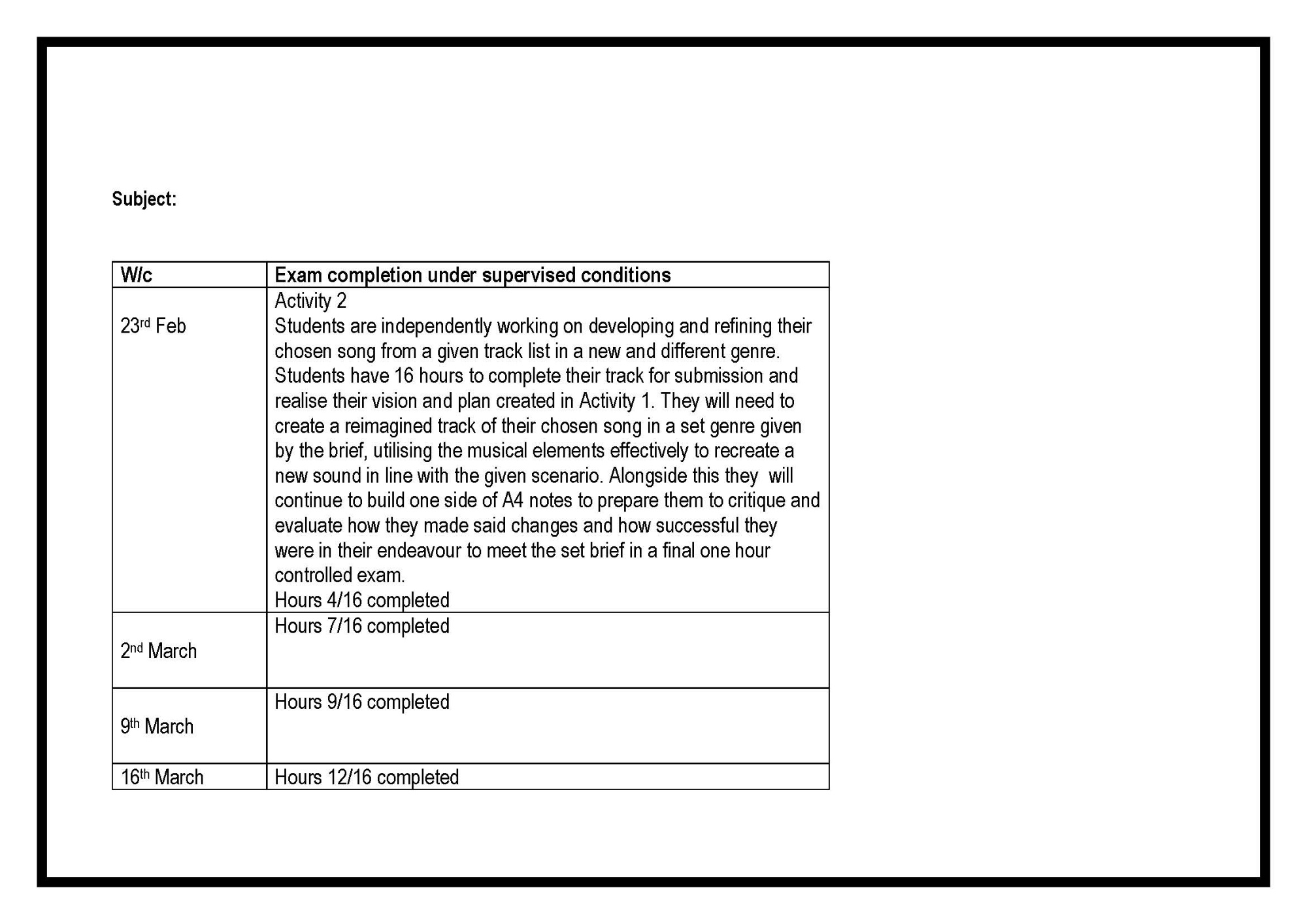
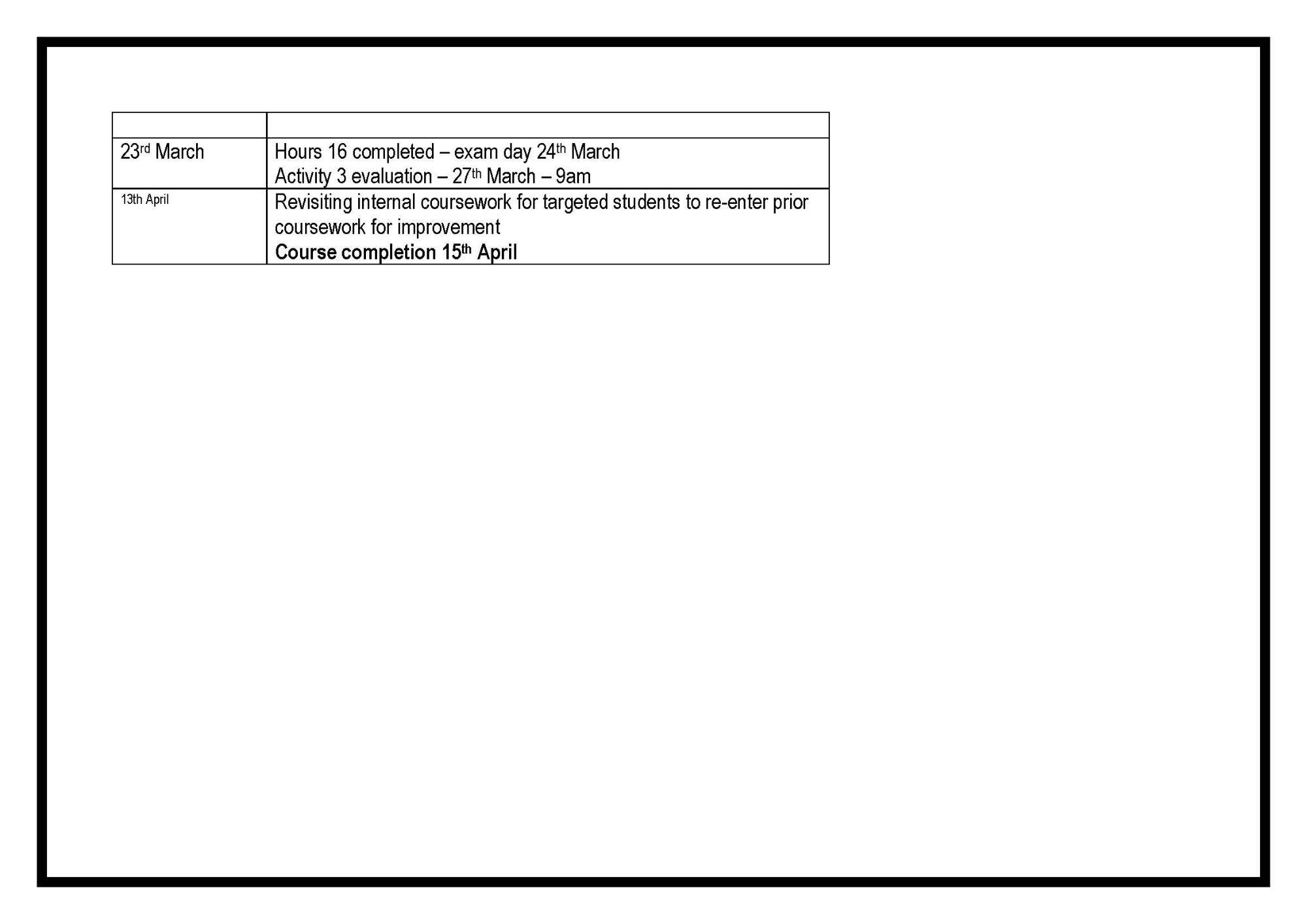
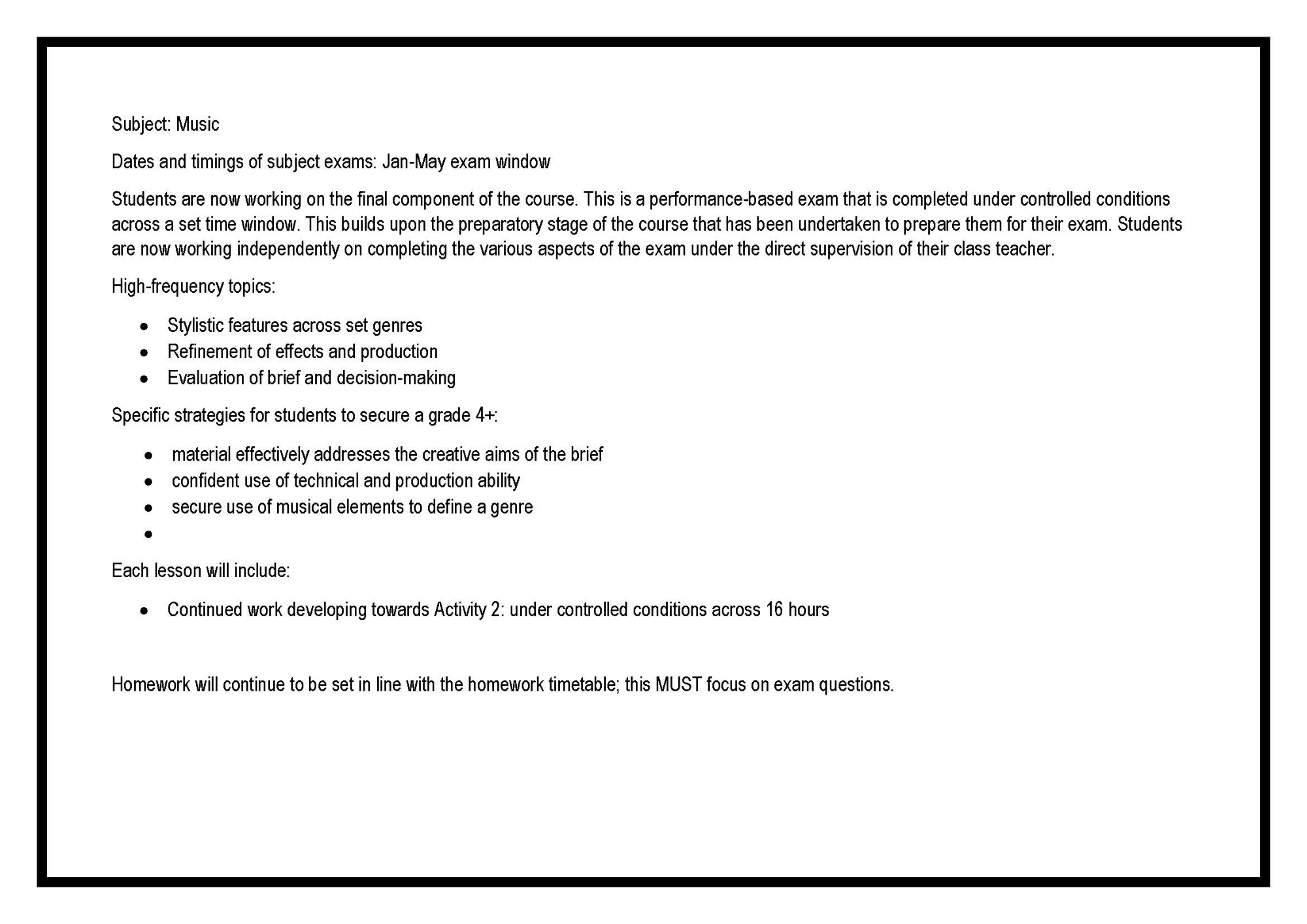
In years 10 and 11, students study the Pearson BTEC Level 1/2 Tech Award in Music Practice, a vocational qualification designed to embed practical skills in music performance, composition, and production in which all three embed and consolidate the listening, analysis and musical appreciation explored fully at KS3.  The course offers students opportunities to develop their abilities, as solo performers, ensemble musicians and as music producers.  Over the three compulsory components that make up the qualification, students explore a wide range of musical genres and styles, gaining insight into the conventions, as well as the melodic and rhythmic characteristics, inherent to each style. Additionally, students benefit from dedicated time and structured guidance to enhance their instrumental skills, outlined by the exam board's specific briefs, students are encouraged to consolidate their learning through consistent practice and opportunities outside of lessons.  This focused approach allows students to engage in thorough practice and rehearsal in readiness for the assessments and further develops their ability to adhere to deadlines and build effective time management skills overall. The structure of the course is planned in a way that allows students opportunities for re-sits if needed for internal units and a mock opportunity for their final synoptic external assessment, detailed in the online curriculum map.


Time allocated

At Gospel Oak School we follow a two-week timetable. Lessons are as follows:


Year 7

Year 8

Year 9

Year 10

Year 11

1 x 60 minutes per week


1 x 60 minutes per week

1 x 60 minutes per week

5 x 60 minutes over a two-week period

5 x 60 minutes over a two-week period


Special Educational Needs & Disabilities

At Gospel Oak School there is a consistent approach applied to inclusion and we support the notion that music is for all, this is vital to the success of the curriculum. It is imperative that every student has access to the music curriculum and can be a successful musician here at Gospel Oak. We recognise that students should have and do have access to additional support when necessary to ensure that this expectation is met. We have many different resources that provide additional and scaffolded tasks to ensure that work is differentiated and accessible for all. SEN information is used to ensure all students can access the curriculum, seating plans are planned and considered with potential barriers for those with educational needs and disabilities. This allows us to effectively plan and manage learning within the classroom and to embed practices and routines that allow us to overcome barriers. For example, students can use quiet and safe spaces via practice rooms, staff ensure that all needs are considered with the lesson and how to accommodate needs via student passports and intervention strategies.


Links to the Local Music Hub

Gospel Oak School collaborates closely with Sandwell Music Service.  The music service provides instrumental lessons and provides free instrument hire for students learning to play. The service provides instrumental (peripatetic) teachers to deliver weekly; group, paired or one-to-one lessons within the school day.


Music Qualifications

We currently offer students the opportunity to pursue the vocational Pearson BTEC Level 1/2 Tech Award in Music Practice during Key Stage 4. In addition to this, students across all key stages have the opportunity to undertake graded music examinations with their peripatetic teachers on their chosen instrument.


PART B: Co-Curricular Music


Peripatetic Offer – Sandwell Music Service

Gospel Oak School offers peripatetic music lessons delivered by specialist instrumental teachers designed to further embed students' musical education through weekly tuition. This offer provides opportunities for students to receive lessons on a variety of instruments (below), to explore and receive diverse regular musical opportunities either as a group, paired or one-to-one basis.


  • Piano and Keyboard: Students can learn classical and contemporary styles,
  • Guitar: Acoustic, electric, or bass guitar lessons are available, covering a wide range of genres from classical to rock.
  • Strings: Violin lessons emphasise technique, musicality and ensemble playing.
  • Brass: Trumpet, trombone and horn instruction
  • Woodwind: flute, saxophone and clarinet.


Lessons are partially subsidised by the school, the budget of which is allocated prior to the September starting date. Current forecasts indicate a total of 5 hours per week will be provided for 2024–2025 (at a rate of £48.50, over 38 weeks and a total cost of £6,250). The music service deadline for the order is usually the end of June.


There are also a range of area ensembles and workshop opportunities, operating throughout the year at various locations. The usual process for applying to join is via an audition or local sign up.


Part C: Musical Experiences

This section covers additional musical events and opportunities that are organised, such as concerts and educational visits that take place within the academic year.


  • Gospel Oak Christmas Concert – we host a variety performance across the performing arts faculty to showcase the talent across Dance, Drama and Music. Parents, students and staff are invited to attend the concert and from this evening a selection of acts are chosen to perform at the final whole school assembly of the year.  Many students will not have showcased their talents before to an audience, so this is a fantastic confidence-boosting opportunity and engages our new year 7 students very quickly.
  • Year 10 Liverpool Music Museum – this is an external trip where students explore the styles and genres of their BTEC qualification, it provides an opportunity to immerse themselves in musical history and see a live music performance.
  • Whole school musical production, 2025 saw our second annual musical.  Students performed Annie for 3 nights to a variety of parents, students and staff.  A matinee also took place for the local primary schools. We are already planning our production for 2025 and hope to continue to build upon the success of this performance.
  • Gospel Oaks’ Got Talent – Although this performance was not undertaken last during 2024 we successfully planned and held this event to much success during to make its return during summer 2024-2025.  It is an opportunity for students to engage in whole school performance both as a performer or as a member of the voting audience to raise the cultural appreciation of talent and the arts for pupils and staff alike. This was a whole school event to which all pupils engaged as the audience.


Part D: In the future


This section delves further into future improvements we hope to embed for the next academic year and beyond.


A commitment to maintaining and grow the links with Sandwell Music Service, ensuring a budget is allocated to cover the peripatetic provision within the school.


Action points that we have made strong leaps with during 2024-2025 are:


Action Point: To embed regular performance within the wider school and community, creating a performance timetable for the academic year. Performances to be included in assemblies, open evenings, parents evenings, sports day and end of year celebrations.


How we were successful:

  • We established regular performances during school events developing a strong appreciation for performing arts from our pupils and staff showing growth in this area.
  • We performed at our local and feeder primary school to build links within the community.


Action point: To provide performance opportunities across the Trust through recently being appointed the lead at curriculum Co-Design, in which all music teachers meet termly, building further links with other schools within the trust.


How we were successful:

  • Gospel Oak performers participated in a trust wide concert including a trip to Arrowvale to perform alongside other students from every school within the trust.


Action points for this academic year:


Action Point: To establish band ensemble with support of peripatetic teachers/external providers.

Action Point: To make stronger use of workshop opportunities and CPD provided via the music service, to integrate this into a yearly well considered timetable.

Action Point: To ensure students experience live music, exploiting all opportunities to see a range of music across different genres and in various locations across the city e.g. Key Stage 3 concert at Symphony Hall. To maintain and further arrange visiting musicians and workshops within the school to build music as an ingrained part of school culture.


Links to relevant documents:


The power of music to change lives: a national plan for music education - GOV.UK (www.gov.uk)


Teaching music in schools - GOV.UK (www.gov.uk)


Simply ‘doing’ music is not enough - GOV.UK (www.gov.uk)


Governing board guide to music (nga.org.uk)


Contact Us

Gospel Oak School,
Bilston Road,
Tipton,
DY4 0BZ

0121 556 1351